Latest Post

3000-year-old trousers were cut like Justin Bieber's

Two pairs of 3,300-year-old trousers found in China's far western Xinjiang region may be the world's oldest, state-media reported on Friday, June 6, 2014. 

Two pairs of 3,300-year-old trousers found in China's far western Xinjiang region may be the world's oldest, state-media reported on Friday. Archeologists in May found animal-fur menswear on the bodies of two mummies, identified as male shamans in their 40s, the state-run China Daily cited scientists as saying.

An international team is working together to repair and preserve the two pairs - which are the oldest yet discovered with a clear resemblance to modern trousers, the report said. "They were almost of the same shape as today's trousers," the report quoted Lu Enguo, a researcher at the Institute of Archaeology in Xinjiang, as saying.

Despite their age, the trousers had exquisite detail woven into the wool. "We tend to underestimate the efforts people spend on making garments several thousand years ago, because they are seldom preserved," says Wagner. "Clothes were all about style and appearance, not only function."


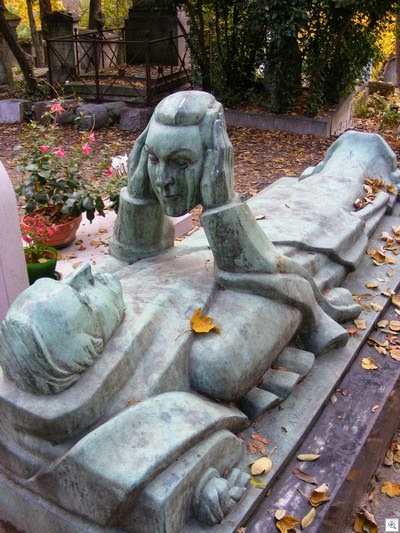
Strange and Bizarre Gravestones

Though unusual yet, you can find absolutely unique and interesting headstones at certain cemeteries. So, shown below are some bizarre and extravagant gravestones.


3D model of the Earth without water in the Oceans [amazing gif]

Ever wonder what Earth would like without water in the Oceans?
 If you've ever wondered what Earth would like without water - take a look at this cool video.
 I did not make this video nor do I own the content.


Don't Use These Hand Gestures In Foreign Countries

These hand gestures might not seem like such a big deal but in certain countries you can be arrested for using them.


Freestyle Soccer Star vs Young Men in Street Soccer [amazing video]

Grandpa Sean Garnier, disguised as an old man, teaches some young guys a lesson. The stunt was sponsored by Mexican department store Coppel, who were obviously inspired by Pepsi’s Uncle Drew ad with Kyrie Irving.

Most people can kick a football - some can do a kick-up or two - but Arnaud “Séan” Garnier possess the skills to make a football dance. The freestyle football star hails from Sens in France, and began his football career like most – on the pitch.

Unfortunately, a string of injuries eventually forced Séan to abandon his dream of a career as a professional footballer.


But all was not lost – he began to study as a football instructor in Paris, and in 2006 discovered a new passion that combined break dancing and football; the urban art of freestyle football.

Séan quickly found his groove, developing his own style and unique set of skills. Within two years, he went from demoing on the streets of Paris to the world stage, and in 2008 was crowned World Champion at the inaugural Red Bull Street Style World Finals in Sao Paulo, Brazil, the spiritual home of freestyle.


Alien Face On Sun (June 1, 2014)

SOHO/NASA shots of the sun today and came across this unusual face. Sure you can see other faces near it, but this one face is larger and better detail. 

Professor Michio Kaku says that there are three types of alien civilizations, humans not even rating on the scale we are so primitive in our technology. However a type 2 civilization would have harnessed the power of sun. So this alien civilization is at least a type two but maybe a type 3.

Why put the face on the sun...perhaps a great person in their society passed away and they want to show their appreciation and respect to that person. Or perhaps its to commemorate the birthday of a great individual within the civilization.


Mud Cookies

 It's not just a pregnancy craving—eating nonfoods may be unexpectedly common. Haiti: Mud cakes become staple diet as cost of food soars beyond a family's reach. The poor in Haiti have to resort to eating cookies made of dirt just to give themselves the feeling of being full 
Impoverished Haitians are increasingly resorting to eating biscuits made of mud as food prices soar in the Caribbean country. The discs are made from dried yellow clay mixed with water, salt and vegetable shortening or margarine. The mud, which comes from Haiti's central plateau region, is first strained and then shaped into biscuits which are left in the sun.

The pale brown biscuits, known by locals simply as "terre", have traditionally been eaten by pregnant Haitians and children as an antacid and source of calcium. However, for some Haitians unable to afford even a plate of rice, terre has become their staple diet.

The Food and Agriculture Organisation of the United Nations has expressed concern over food prices in the Caribbean, recently declaring a state of emergency in Haiti and several other countries. The agency estimates prices have rocketed by as much as 40 per cent due to floods and crop damage caused by the 2007 hurricane season. At the market in Haiti's La Salines slum, two cups of rice now sell for 60 US cents, up 10 cents since December and 50 per cent from a year ago.

Beans, condensed milk and fruit have gone up at a similar rate. Even the price of the clay used in the biscuits has increased considerably though, at five cents each, they are still relatively cheap. The biscuits reportedly taste smooth but suck out the moisture from the mouth as soon as they touch the tongue, leaving an unpleasant earthy aftertaste which lingers for hours.

Gerald Callahan, an immunology professor at Colorado State University who has studied geophagy, the scientific name for dirt-eating, said mud can contain dangerous parasits or toxins. But it can also strengthen the immunity of unborn babies to certain diseases, he said.

Haiti is the poorest country in the western hemisphere. Seventy-six per cent of the population lives on less than $2.25 a day. Malnutrition is widespread and diarrhoea kills one in five children under the age of five. Haitian doctors say that people who depend on the biscuits for sustenance risk malnutrition. Dr Gabriel Thimothee, executive director of Haiti's health ministry, said: "Trust me, if I see someone eating those cookies, I will discourage it."


Living in a metal cage homes

Hong Kong is China’s richest city and boasts more Louis Vuitton boutiques than Paris, yet, there are tens of thousands of residents living what I can only describe as hellholes. They are cramped into living conditions that you wouldn’t let a stray dog sleep in. These ‘cages’ measure 180 by 60 centimeters. This sadly is the reality of the world that is rich and poor.
More and more of the city’s blue collar workers live in structures like these, which are “essentially bunkbeds that are sealed off with cage wire so that people can lock them when they aren’t there.

They are the size of a single bed and are about 4 feet tall for each ‘unit’.” Bathrooms are shared with everyone else, and in the buildings itself, which are old tenement flats, live around 1,000 people.


Raising land value has resulted in increasing scarcity of space, which forces specifically the lower classes to come up with rigorous ideas like these.
Renting one cage home in Hong Kong costs about $167 (!) a month. The highest bunks are the cheapest. This example shows us the dark side of globalization. Globalization has winners – the flexible knowledge worker, the creative class -, and losers. Many losers.


Baby-jumping: The world’s most dangerous festival

Spain is renowned for its slightly bonkers and death-defying festivals. Think tomatoes to the head or a bull to your behind . However, this less well-known festival certainly takes the title of Spain’s (actually – the world’s) most dangerous festival.
El Colacho, aka Baby jumping. Nope, not a metaphor or figure of speech, it does what it says on the tin. Every year in Castillo de Murcia (near Burgos) men dressed as the devil jump over babies lay on mattresses in the street. That’s grown men, babies born in the last 12 months and a jumping competition. Some things can only happen in Spain.

It usually takes place the Sunday after Corpus Christi, which in 2014 is on Thursday 19 June. Although it’s not officially sanctioned by the church (you can’t blame them, really) like most things in Spain, its roots are in religion.

The festival began back in 1620, in the town Castrillo de Murcia, northern Spain. The idea is that jumping over the babies blesses them, removes original sin and thus prepares them for a life with God. Apparently, as the devil lures the evil spirits away, it also protects the babies from illness. I think I’d feel safer having a jab myself.

The baby jumping festival is likely the town’s annual highlight; the sleepy village only has a population of 500. It comes to life during the week of the festival; Spaniards and tourist alike. Throughout the week you can enjoy music, feasting and frivolities.

Once thing is for sure; the Spanish know how to party, and how to throw a wacky festival. Fancy taking part?


A Smart Lighter That Tracks How Many Cigarettes It Lights

Quitbit is a smart lighter featuring a heating coil that keeps track of how many cigarettes it lights in order to better help users interested in quitting or scaling back their habit. The light can also includes a companion app that provides better analysis of users’ habits.
There are already devices that track your steps, weight and calories, but the latest gadget flips health tracking on its head by monitoring how many cigarettes you have. Instead of encouraging people to smoke more, the smart lighter has been designed to shame them into quitting by revealing the true extent of their habit.

Called Quitbit, the device resembles a Zippo lighter and each time it’s used, it records the number of cigarettes the user has had and how long it’s been since they last lit up.

This app can also reveal how much money has been spent on cigarettes, or subsequently saved by cutting back, and helps smokers learn at what times during the day they are smoking the most.

Progress can then be shared with Quitbit's community or with friends on Facebook and Twitter. Quitbit was created by Boston-based designer Ata Ghofrani. It lights cigarettes using a heating element, similar to car lighters, and the electronics count each cigarette that is lit.


Best Stories from Around the Web

 
Support : Creating Website | Johny Template | Mas Template
Copyright © 2011. Art'einsky - All Rights Reserved
Template Created by Creating Website Published by Mas Template
Proudly powered by Blogger